

Brain Computer Interface (BCI)
Not a secret, public knowledge
If you want to ignore that such devices exist, then you are either naive or not interested in science. The brain computer interface exists commercially for more than a decade. In fact, the earliest documented attempt at a "mind-reading" device was a machine invented by "Julius Emmner" in the 1890's (by means of phonautographic). The earliest research on electrical activity of the brain took place in 1920's (by means of EEG). With advent of computers the first real study of brain-computer interface which I'm aware of was begun in 1970's at University of California, Los Angeles (UCLA). The speed in which these interfaces evolve is unbelievable.
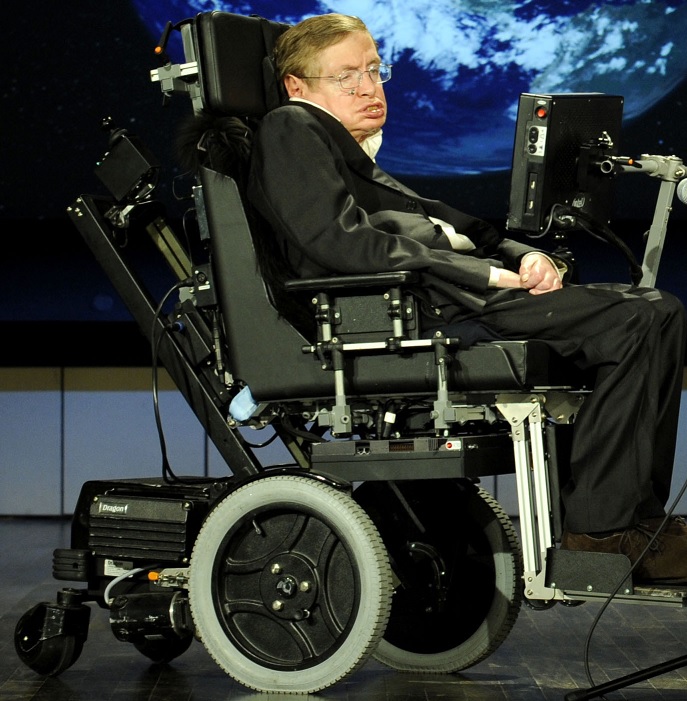
In fact, one of the most crystal-clear examples of these devices was in front of everyone eyes and no one was paying attention to it. Remember this person: "Stephen Hawking"

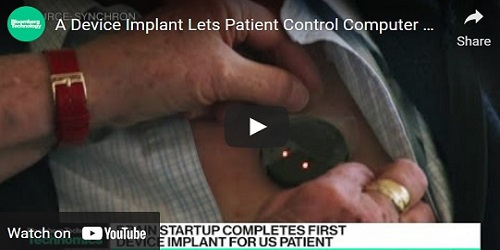
How do you think he could communicate with the world? The answer is "Brain Computer Interface". Look at the most easiest one "No Open Brain Surgery Required" (from Synchron an Australian company).
Some lectures about BCI's in TEDx Talks:
Rethinking the Brain Machine Interface | Polina Anikeeva | TEDxCambridge (year 2015)
New Brain Computer interface technology | Steve Hoffman | TEDxCEIBS (year 2017)
The coming transhuman era: Jason Sosa at TEDxGrandRapids (year 2014 shows researches done in 2011)
Different names for these devices are:
- Brain-computer interface (BCI) from Wikipedia
- Mind-machine interface (MMI) from Massachusetts Institute of Technology (MIT)
- Neural-control interface (NCI) from National Library of Medicine U.S. (National Center for Biotechnology Information)
- Brain Computer interface (BCI) from National Library of Medicine U.S. (National Center for Biotechnology Information)
Right now there are many different fields of usage:
- Comfort: Typing, surfing internet, moving the wheelchair, turning on and off all your home devices. All with your thoughts. The most famous example of this technology was Stephan Hawking's wheelchair with its attached screen.
- Gaming: Neuro gaming (now available in wide range).
- Military: Talk to each other remotely and wirelessly just by thinking, having a total view of the battle in their mind, preventing soldiers to be afraid, etc.
- Vehicles control: Wheelchair ¹′², airplanes, helicopters, ships, cars, even your mower or any other moving system.
- Security: Authentication of Password.
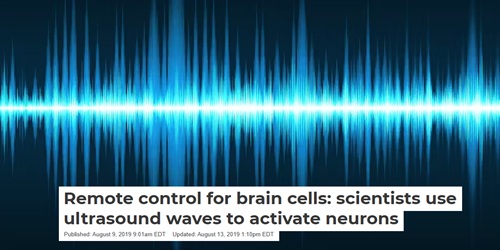
The difference of the past and current devices is that in the past you needed to put an EEG helmet on your head, 1970's. Later they implanted (needed surgery) these electrode in your head and they became wireless (first decade of this century). The latest technologies are even more easy and doesn't need surgery, just an injection is enough. Australian company Synchron is able to put electrodes, CPU's and other devices for transmitting the signals in your blood vessels without surgery. Of course, to activate (control) brain cells there is even no need to put anything in your skull as the first article bellow explains.
Below are some examples of these devices (sorted by date) developed in different labs and universities around the globe. My guess is that in less than two decades anyone who has the money will have one in his/her head.
Mind-reader Machine Lets You Type With Your Brain
Maastricht in the Netherlands. Jun 29, 2012

Australian Academy of Science: Just think
Playing computer game by thinking, without using hand. Mar 20, 2013

Brain Implant Lets Paralyzed Type With Their Mind
Stanford University Feb 23, 2017

Remote control for brain cells: scientists uses ultrasound waves to activate neurons
Salk Institute for Biological Studies. August 13, 2019
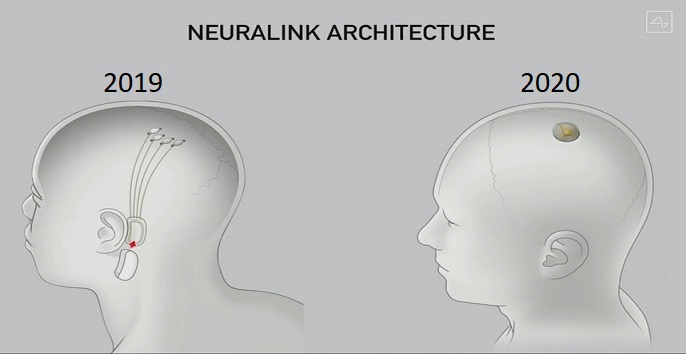
NeuraLink Architecture
The Actual Device
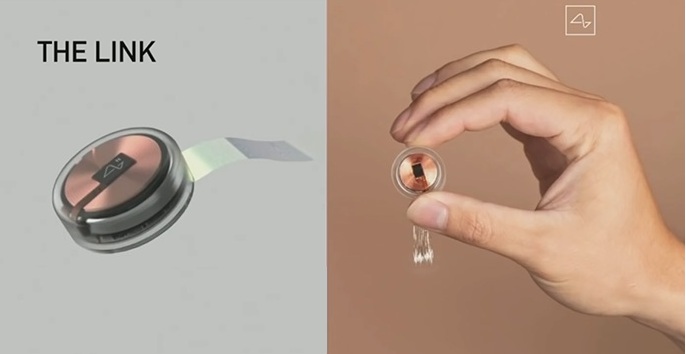
You Can Have Four
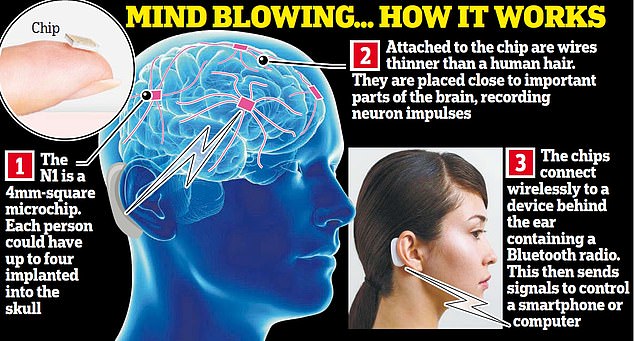
Elon Musk Explains his new "Hidden Power"

Monkey plays MindPong with his Neuralink
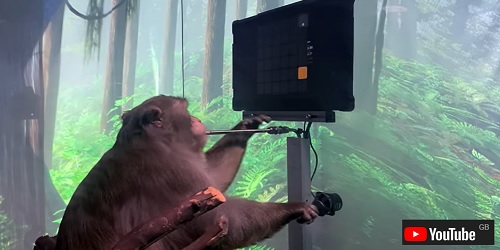
How Mind-Reading Technology conquers your Brain
Ted Talks, May 22, 2020

A Real Mind Reading Machine
Paralyzed People Communicating. May 23, 2021

With These Devices You Can Control Machines with Your Mind
German DW TV English, October 8, 2021
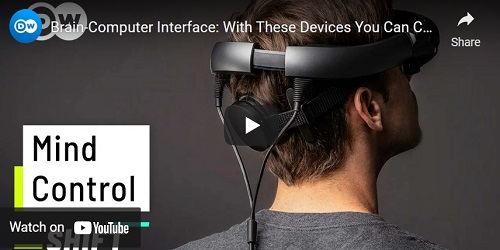
Brain Implant